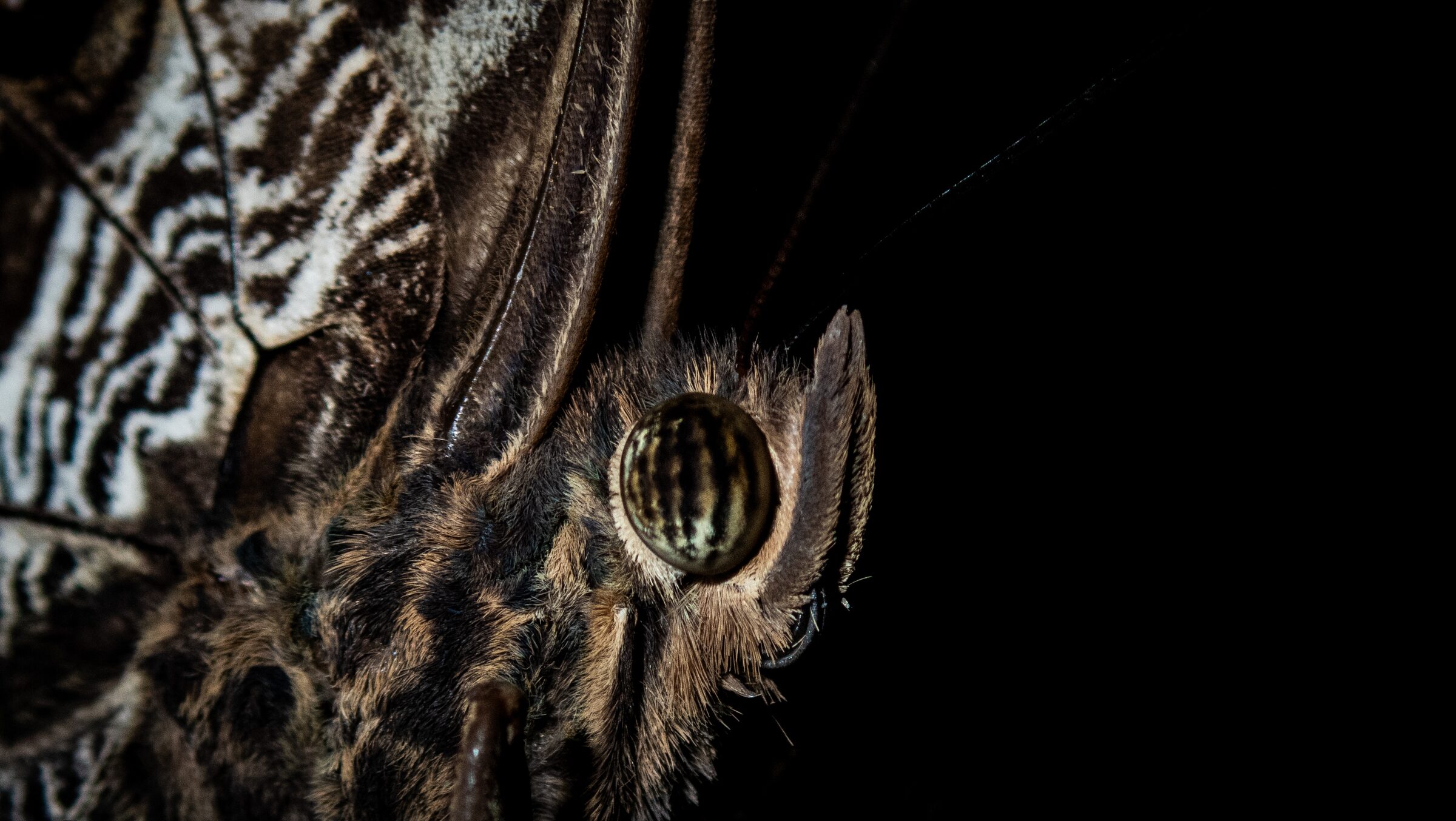
Close-up of a Caligo owl butterfly photographed at night near Tambopata Research Centre, Peru. The large round compound eye sits at the centre of the frame; wing scale patterns fill the left side.

Latin American-led genomics

Rich in species. Much left to sequence.

Caligo connects researchers, collections and sequencing facilities to build reference genomes for Neotropical butterflies and moths.

Photograph: Wikimedia Commons user “Polygonia c-album”. Cropped and resized. · Source · CC BY-SA 4.0

Why butterflies and moths?

Read about Caligo

Butterflies and moths live in nearly every terrestrial ecosystem and are especially diverse in the Neotropics. They are an ideal group for studying ecology, evolution and conservation.

But most species in the region still lack reference genomes and genetic markers. Caligo brings researchers and resources together across Latin America to identify species, discover new ones and study how they arise.

What Caligo is building

  • Sequence undersampled groups

    Produce DNA barcodes, population data and reference assemblies for taxonomic groups that remain poorly represented.

  • Link genetic information with specimens

    Each sequence or assembly points to a documented specimen in a collection, so researchers can check which organism was sequenced and where it came from.

  • Build regional capacity

    Expand sequencing, sample banking and bioinformatics in Latin America, from country capitals to remote field sites in areas of high biodiversity.

  • Train and credit fairly

    Support training, open data and shared publications while recognising everyone who contributes specimens, analysis or knowledge.

Leadership team

Eight researchers from institutions in Latin America and Europe coordinate the community.

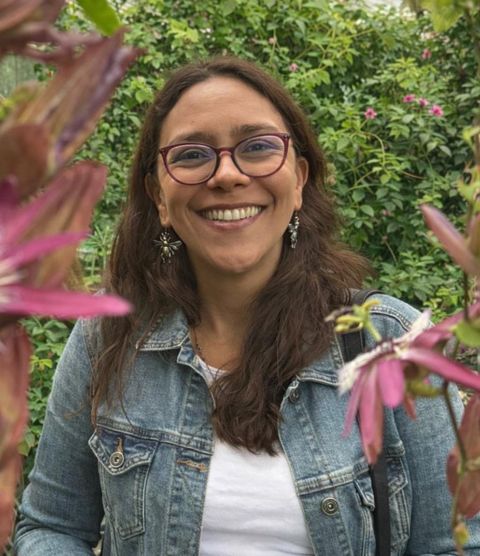
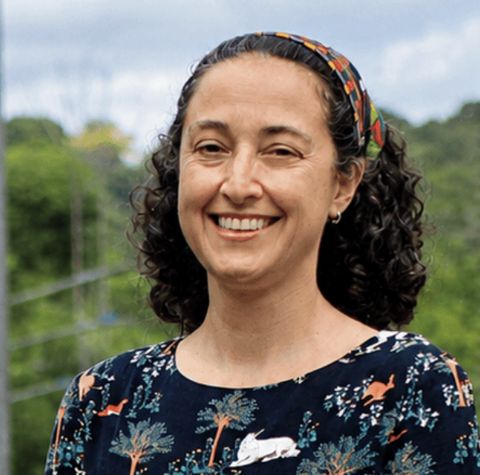
Portrait of Caroline Bacquet.
Caroline Bacquet

Butterfly ecology and environmental response

Regional ties: Ecuador

Universidad Regional Amazónica Ikiam

Profile at Ikiam
More about Caroline Bacquet

Universidad Regional Amazónica Ikiam

Profile at Ikiam

At Ikiam’s Scientific Insectary, Caroline studies the genetics, molecular evolution and behaviour of Amazonian Lepidoptera, including their responses to environmental change.

Portrait of Gyanpriya Maharaj.
Gyanpriya Maharaj

Butterfly ecology and biodiversity monitoring

Regional ties: Guyana

University of Guyana

University of Guyana profile
More about Gyanpriya Maharaj

University of Guyana

University of Guyana profile

Gyanpriya studies the diversity, genetics, physiology, ecology and behaviour of Neotropical butterflies, alongside broader work in entomology and insect monitoring.

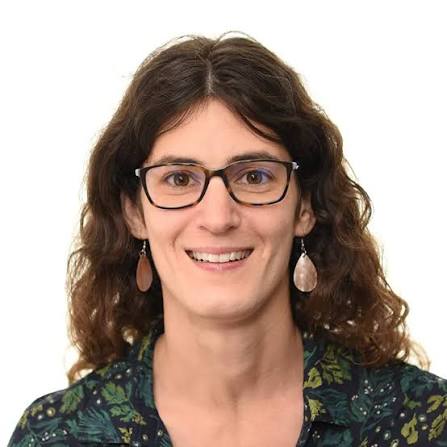
Portrait of Carmen Barragán.
Carmen Barragán

Conservation and population genetics

Regional ties: BrazilColombia

Universidade Federal de Goiás

PUC Goiás research feature
More about Carmen Barragán

Universidade Federal de Goiás

PUC Goiás research feature

Carmen combines molecular ecology and conservation genetics to study Neotropical species, population history and biodiversity conservation.

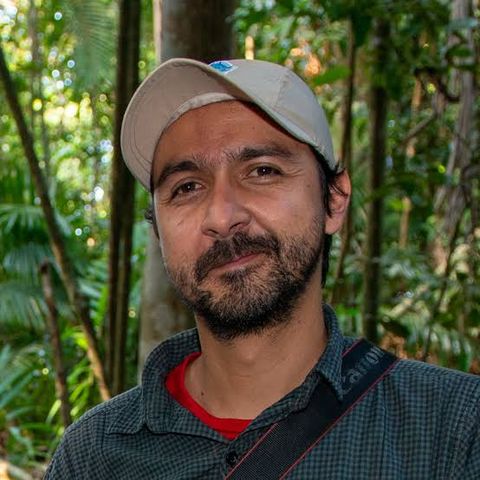
Portrait of Carlos Arias.
Carlos Arias

Evolutionary genomics and speciation

Regional ties: Panama

Smithsonian Tropical Research Institute

Smithsonian team profile
More about Carlos Arias

Smithsonian Tropical Research Institute

Smithsonian team profile

Carlos studies how species form and what limits their divergence, using computational methods and Heliconius butterflies.

Portrait of Nicol Rueda.
Nicol Rueda

Chromosome evolution

Regional ties: ColombiaUnited Kingdom

Wellcome Sanger Institute

Profile at Sanger
More about Nicol Rueda

Wellcome Sanger Institute

Profile at Sanger

Nicol studies chromosome structure and sex chromosome-autosome fusions in Heliconius, using reference genomes to investigate Lepidoptera evolution.

Portrait of Joana Meier.
Joana Meier

Speciation and comparative genomics

Regional ties: EcuadorPeruUnited Kingdom

Wellcome Sanger Institute

Profile at Sanger
More about Joana Meier

Wellcome Sanger Institute

Profile at Sanger

Joana works on speciation and evolutionary genomics, studying how interbreeding and chromosomal rearrangements contribute to rapid adaptation and the formation of new species.

Portrait of Vicencio Oostra.
Vicencio Oostra

Tropical adaptation and genome resources

Regional ties: ColombiaUnited Kingdom

Queen Mary University of London

Profile at Queen Mary
More about Vicencio Oostra

Queen Mary University of London

Profile at Queen Mary

Vicencio combines development, genomics, evolutionary biology and ecology to study how tropical butterflies adapt to environmental change.

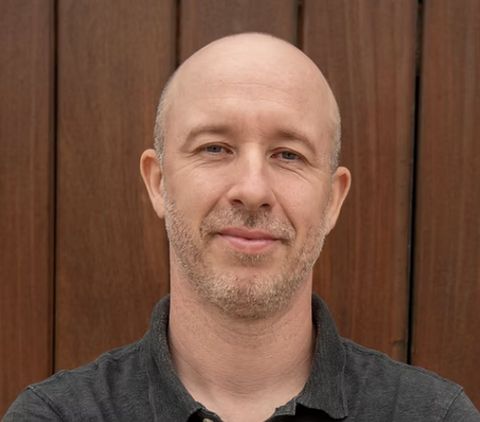
Portrait of Geoff Gallice.
Geoff Gallice

Amazonian entomology and conservation

Regional ties: PeruUnited States

Pontificia Universidad Católica del Perú / Alianza para una Amazonía Sostenible

Profile at PUCP
More about Geoff Gallice

Pontificia Universidad Católica del Perú / Alianza para una Amazonía Sostenible

Profile at PUCP

Geoff studies the taxonomy, systematics, ecology and conservation of Amazonian insects. He also teaches and supervises research on sustainable biodiversity management in Peru.

A network across Latin America

Eight partner facilities in six countries can sequence Caligo samples close to where they are collected.

  1. Universidad del RosarioBogotá, Colombia
  2. Universidad Nacional de ColombiaBogotá, Colombia
  3. Smithsonian Tropical Research InstitutePanama City, Panama
  4. Universidade Federal de GoiásGoiânia, Brazil
  5. Universidad Regional Amazónica IkiamTena, Ecuador
  6. Universidad Austral de ChileValdivia, Chile
  7. Universidade Federal do ParáBelém, Brazil
  8. PUCP / Alianza para una Amazonía SosteniblePuerto Maldonado, Peru
  • Argentina
  • Bolivia
  • Brazil
  • Chile
  • Colombia
  • Ecuador
  • French Guiana
  • Guyana
  • Mexico
  • Panama
  • Peru
  • Puerto Rico
  • China
  • Czech Republic
  • France
  • Germany
  • Netherlands
  • Poland
  • Spain
  • Sweden
  • Switzerland
  • United Kingdom
  • United States

Outside the map

  • Bogotá sequencing workshop20–23 July 2026
  • Campinas hackathon30 March – 3 April 2027
Platforms and websites
Sequencing facilitiesCountries with membersMeetingsMap: Natural Earth

Caligo in action

Workshops, hackathons and other events help us learn together and grow the network.

  1. 3 months ago

    Bogotá sequencing workshop

    Bogotá, Colombia

    The network’s first activity in Latin America, with the Red Colombiana de Genómica. Eight Heliconius species were sequenced during the workshop.

    The Heliconius pilot project
  2. Applications closed

    Sequencing support for Lepidoptera from Colombia

    Colombia

    Our first call supported local pilot projects to sequence Lepidoptera species from Colombia.

    See past call
  3. Open until 15 November

    Sequencing support for Lepidoptera from Ecuador

    Ecuador

    This call funds local research teams to sequence Lepidoptera species native to Ecuador.

    See the call
  4. In 5 months

    Campinas hackathon

    Campinas, Brazil

    Hackathon at the Biology of Butterflies and ELEN (Neotropical Lepidoptera meeting) congress: participants assemble reference genomes and analyse the data together.

    Congress website

Bring a question, an organism or your expertise

You can contribute specimens, sequencing capacity, taxonomic knowledge or a research question. Register with the network, join the conversation on Discord or contact us by email.

Open the registration formJoin the Discord